
See also: Ceremonial role of the Monarchy
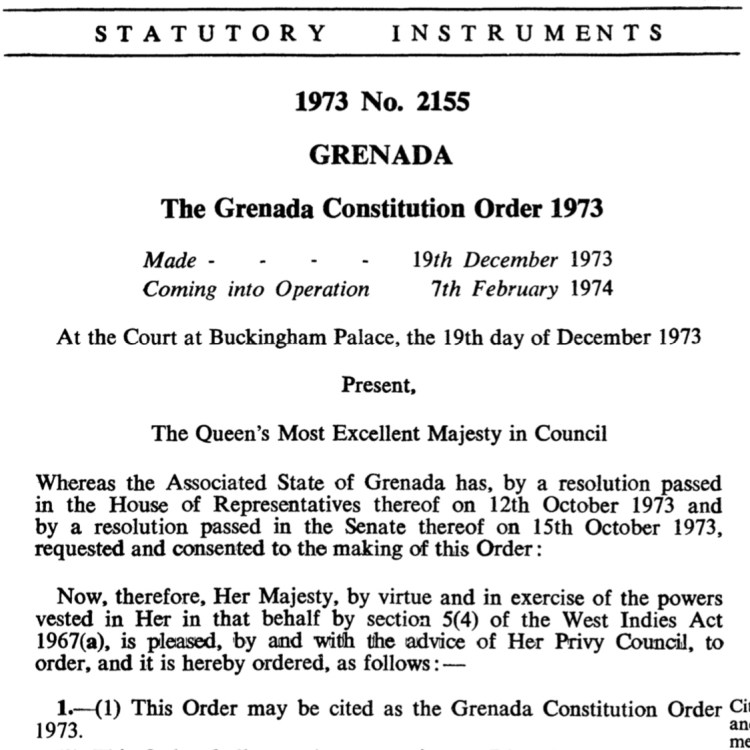
The Grenadian Monarchy, constitutionally referred to as The Crown, plays a central role in the Grenadian government, and is deeply enshrined in our constitution. Grenada’s Constitution was in fact enacted as an Order in Council by Her Majesty Queen Elizabeth II.
The primary constitutional provisions establishing the institution of the Monarchy are Section 57, which vests the executive authority of Grenada in His Majesty the King, and Section 19, which establishes the office of Governor-General as the King’s representative.
The monarchy is often referred to as ceremonial, but this is not fully accurate. While the monarchy’s role is indeed mostly ceremonial on a day-to-day basis, it retains key discretionary powers and authority on a number of important areas which may and have been exercised by the King or his representative.
The executive authority of Grenada is vested in Her Majesty.
Section 57.1 of the Grenada Constitution
The Monarchy’s role within the constitution is extensive. The Crown is vested with a number of key duties and functions in the constitution, including:
- The appointment and dismissal of the Governor-General
- The appointment and dismissal of the Prime Minister
- The appointment and dismissal of the Leader of the Opposition
- The dissolution or prorogation of Parliament and calling of general elections
- Granting or withholding Royal Assent to legislation
- The appointment of Senators
- The appointment and dismissal of the Supervisor of Elections
- The appointment and dismissal of certain public service positions
- Encouraging or warning the Prime Minister
In most instances, these duties are exercised on the King’s behalf by the Governor-General, acting on the advice of the Prime Minister, competent Ministers of Government, the Opposition Leader, or other boards and persons. However, certain key powers may be exercised by the Crown independently of advice. Such powers are explored below.
Appointment and dismissal of the Governor-General
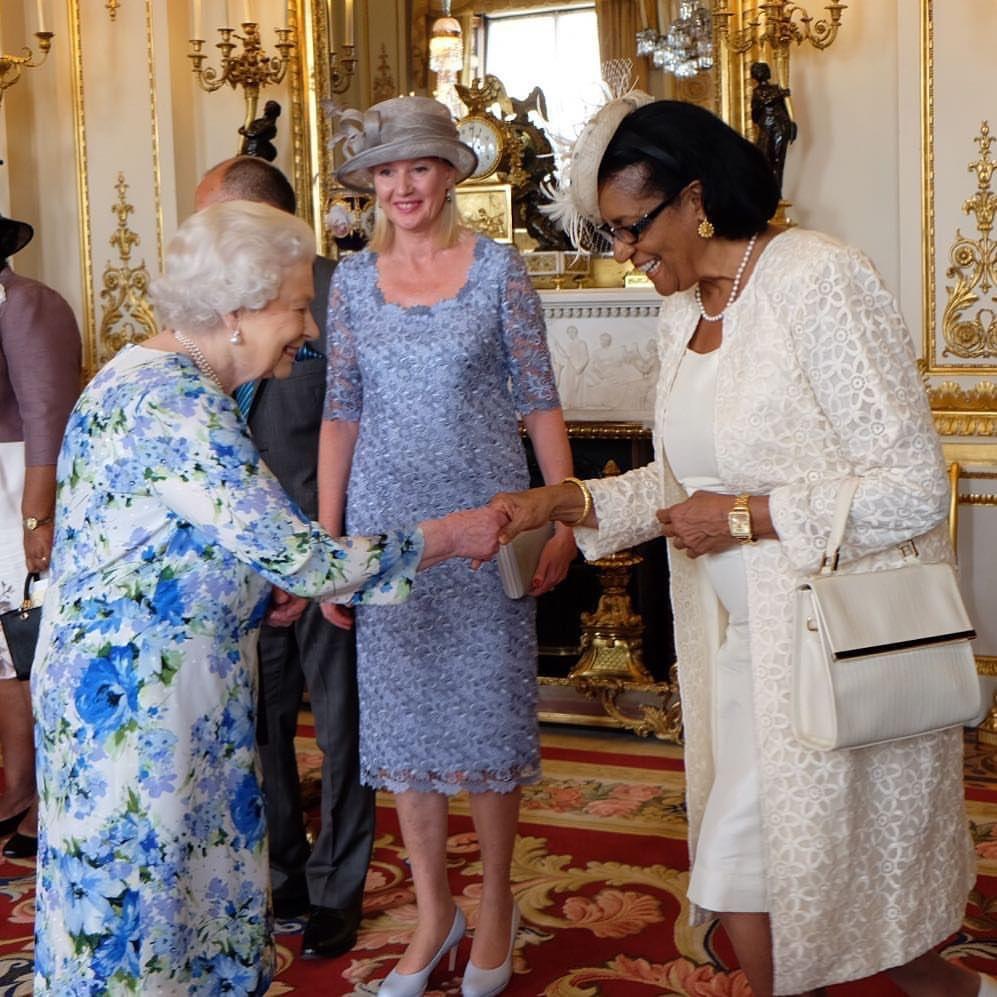
The appointment of the Governor-General, laid out in the Constitution’s Section 19, is the main constitutional duty carried out by the King personally, but remains one of the key and most important ones in the constitution. The King is the guarantor of the independence, neutrality and non-partisanship of the Governor-General, which is vital for the functioning of the office as an effective force to protect the constitution and prevent government tyranny.
The King usually appoints the Governor-General based on the advice of the Prime Minister. Crucially, however, the King is not legally required to follow the Prime Minister’s advice, and may reject it if clearly necessary. This however is rare, as the Prime Minister will rarely challenge the established norms of the independence of the Governor-General to the extent it may warrant a response from the King.
Appointment and dismissal of the Prime Minister

One of the most important constitutional duties of the Crown is the appointment and dismissal of the Prime Minister, who is the head of Grenada’s government. This is laid out in Section 58. As Grenada utilises the Westminster parliamentary system, the Prime Minister is the person who can command the support of a majority of the members of the House of Representatives. After a general election, it is the Crown’s duty, “acting in [its] own deliberate judgement”, to determine who commands majority support, and appoint them as Prime Minister.
There are also scenarios wherein the Crown may dismiss a Prime Minister from office, laid out in Section 58.6. If there has been a successful vote of no confidence in the Prime Minister by the House of Representatives, the Crown can dismiss the Prime Minister if they do not resign within 3 days or ask for a general election to be held. Though not explicitly mentioned in the constitution, under Commonwealth constitutional practice the Crown can also dismiss the Prime Minister if it becomes clear that they have lost majority support, but that it is not possible to recall the House or to hold a formal vote of no confidence. The Crown may also dismiss a Prime Minister who has lost a general election, but refuses to leave office.
Appointment and dismissal of the Leader of the Opposition
The Leader of His Majesty’s Loyal Opposition is the leader in parliament of the largest non-government party. Under Section 66, the Crown shall “acting in [its] own deliberate judgement” determine who commands the support of the largest amount of representatives who are in opposition to the government, and appoint them as Opposition Leader. Likewise, the Crown may dismiss the Opposition Leader if it becomes clear they no longer command the support of the largest amount of non-government representatives.
Dissolution and prorogation of Parliament
The Crown’s power to dissolve or prorogue parliament is laid out in Section 52 of the constitution. The dissolution of parliament entails that parliament is disbanded and that a new parliament must be elected in a general election. Under Section 52.4, the Crown is to exercise the power of dissolution on the advice of the Prime Minister, but there are certain exceptions.
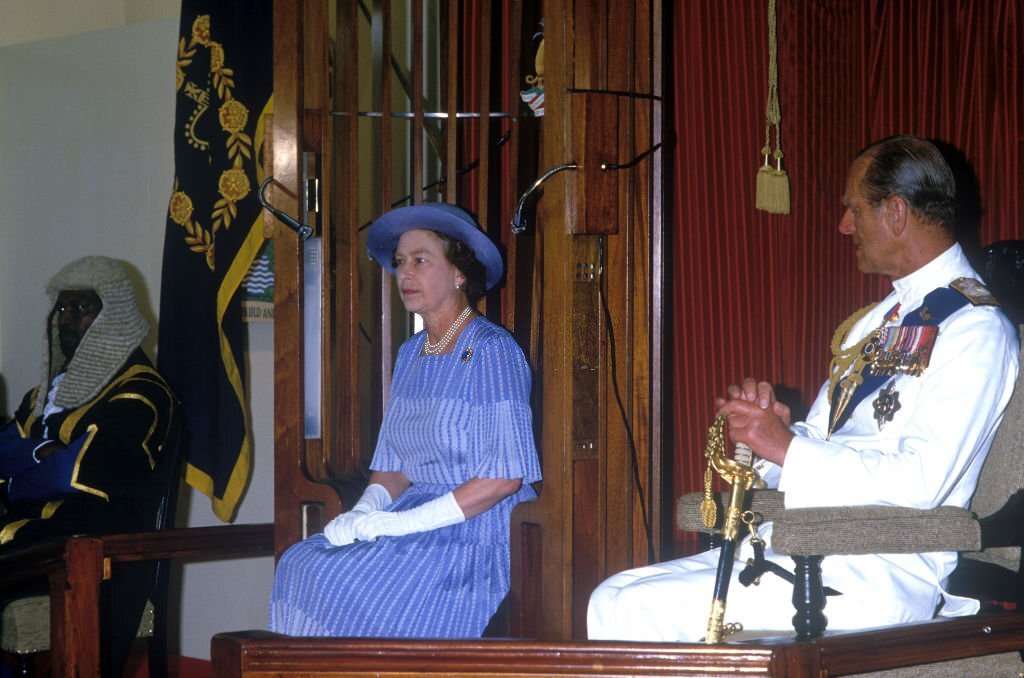
Section 52.4a provides that if the Prime Minister has lost a vote of confidence in the House of Representatives and neither resigns nor advises a dissolution, the Crown has the right to “acting in [its] own deliberate judgement” dissolve parliament. Additionally, though not specifically mentioned, Commonwealth constitutional practice makes it clear that the Crown has the ability to refuse advice to dissolve parliament again from a Prime Minister who has just lost an election.
Prorogation entails ending a session of parliament without dissolving it. During a prorogation parliament may not sit. As such, prorogation could be a powerful tool by a sitting government trying to avoid answering to parliament. The power of prorogation, however, is not covered by the stipulation in Section 52.4 that the Crown must act on the advice of the Prime Minister. As such, under Commonwealth constitutional practice, the Crown has the ability and right to refuse a Prime Minister’s advice to prorogue parliament if it is evidently in breach of democratic principles, responsible government, or good governance.
Royal Assent
Royal Assent, also at times referred to as the Royal Veto, is laid out in the constitution’s Section 45. The King is, under Section 23, one of the 3 components of Parliament, alongside the Senate and the House of Representatives. As such, all legislation passed by the Houses of Parliament must receive the approval of the Crown before it becomes law.
Section 45 explicitly provides the ability for the Crown to withhold assent to legislation. The withholding of assent would mean that the legislation cannot become law, making it invalid and it cannot come into effect. Royal Assent is thus a key tool of last resort for the Crown to stop legislation which seriously undermines the rule of law, rights of the people, or otherwise seriously undermines the constitution.
Appointment of Senators

The Senate, the upper of the 2 Houses of Parliament, consists of 13 senators, all appointed by the Crown in accordance with Section 24 of the Constitution. Under this section, the Crown is to appoint 7 members on the advice of the Prime Minister, 3 on the advice of the Prime Minister after he has consulted interest groups, and 3 on the advice of the Leader of the Opposition. As such, under normal circumstances, the Crown has no discretion in appointing Senators. Circumstances, however, can change this.
In instances where there is no elected opposition in the House of Representatives, and thus no Leader of the Opposition, Section 62.2 provides that the Crown may act “in [its] own deliberate judgement” in instances where advice of the Opposition leader would otherwise be required. Since independence in 1974, there have been three separate elections where this has been the case: 1999, 2013 and 2018. In all three instances it fell to the Crown to independently appoint 3 senators, in order to provide some form of parliamentary opposition to the government.
Appointment and Dismissal of the Supervisor of Elections
The office of the Supervisor of Elections, established under Section 35, is one of the most important offices in Grenada, being responsible for supervising the registration of voters, and overseeing the conduct of our elections. Section 35.2 vests the power of appointing or dismissing the Supervisor of Elections in the Crown, “acting in [its] own deliberate judgement”. This is to ensure the independence of the Supervisor from the government, to prevent government interference in the operation of our elections.
Warning or encouraging the Prime Minister
One of the most famous constitutional duties of the Crown, though not laid out in the constitution itself, is “to be consulted, to encourage, and to warn” the Prime Minister. This principle, first laid out by Walter Bagehot in 1867, entails three elements. Firstly is the Crown’s right to be consulted, which means the Crown has a right to be informed of all matters of government, which is constitutionally enshrined in Section 63, and for the Prime Minister to consult the Governor-General on various matters. Secondly is the right to encourage, whereby the Crown has a right to advise and encourage the Prime Minister on a particular course of action. Thirdly, is the right to warn, whereby the Crown has a right and duty to warn the Prime Minister against taking illegal, unconstitutional or other problematic action. The Crown utilising the right to warn to dissuade the Prime Minister from undertaking problematic or illegal actions is usually seen as preferable to the Crown utilising reserve powers, such as dismissal, which should be a last resort if the Prime Minister does not listen to the Crown’s warnings.
 Grenada Monarchist League